

The fuel cell
A fuel cell is an energy converter that can be used to efficiently convert the chemical energy of hydrogen into electricity and heat.


Imagine that water is the solution to the energy needs of the earth!
Nature Proof
Fossil-free electricity from fuel cells
Imagine if water were the solution to the energy needs of the earth! Your home’s power supply is free and can be produced locally. In addition, your vehicle’s fuel is also free and you supply the energy you need nearby, or perhaps even right where you live.
Hydrogen is also an energy carrier just like electricity. This means that hydrogen is not a primary energy source, but can be used to store, transport and provide energy. The flexibility is great because hydrogen can be produced from all types of energy sources. Hydrogen can be used as energy in fuel cells.
A fuel cell is an energy converter that can be used to efficiently convert the chemical energy of hydrogen into electricity and heat. The residual product is pure water, H2O, when oxygen from the air is used. Fuel cells can replace combustion engines in vehicles where they drive electric motors and can also be used to supply energy to homes. They can also be used in smaller devices such as mobile phones, computers or power units for recreational boats. For both portable and stationary applications, there is technology that is commercially available. (Source: Hydrogen Sweden).
The Fuel Cell
How it works
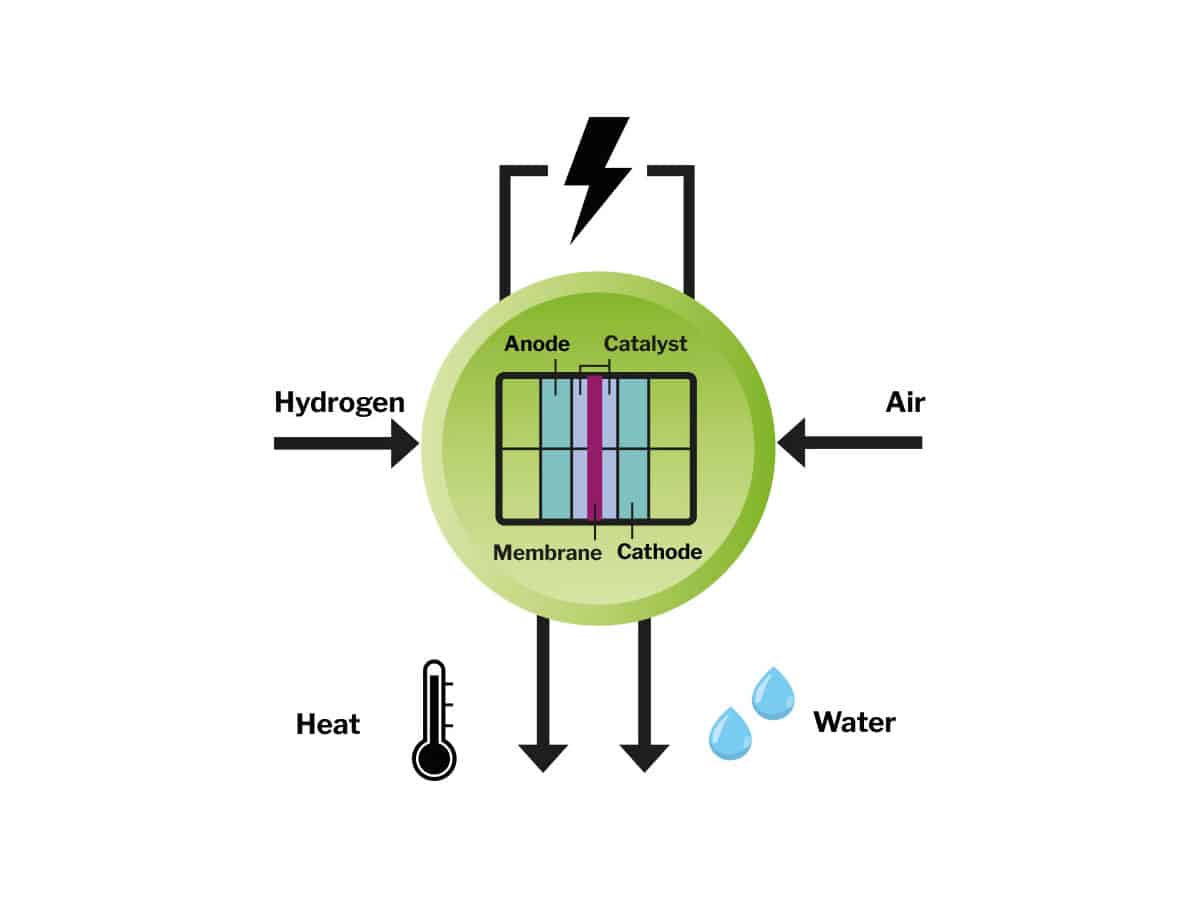
A fuel cell has an anode side and a cathode side separated by a membrane. The membrane only allows protons to pass through. On the anode side, a catalyst splits the hydrogen atoms into protons and electrons. The electrons cannot pass through the membrane but are conducted to an external circuit where they generate electricity. The protons pass through the membrane. On the cathode side, the electrons and protons combine and connect to oxygen gas (O2) from the air. The reaction produces water (H2O). A fuel cell produces about 0.7 volts. To get a higher voltage, many separate fuel cells are combined.

Fuel cell technology will account for at least 25% of Europe's energy supply within 30 years.
The Fuel Cell
Examples of uses
Fuel cell technology is the only 100% fossil-free energy technology where the energy can be used for example to operate vehicles or heat houses. By using hydrogen together with fuel cell technology, you get exhaust-free cars and buses where clean water is the only emission. The technology is used today around the world to store solar and wind power, make homes self-sufficient in energy and to make vehicles completely free of harmful emissions.

Stationary solutions
Smart living with self-produced energy produced locally via co-owned energy production in the area or directly at your own home.
Mobila lösningar
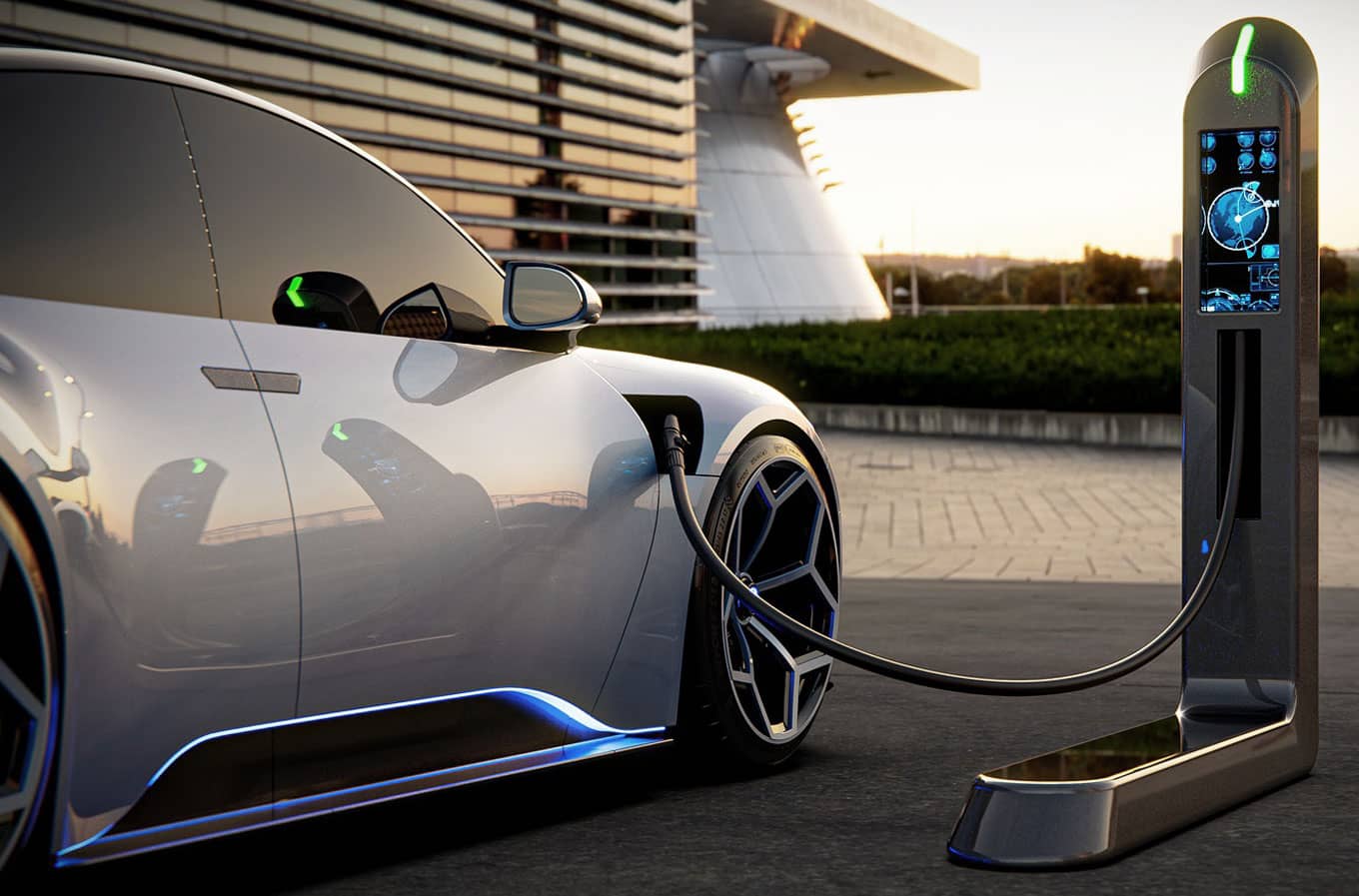
NatureProof brings the technology to market and can deliver mobile solutions for temporary infrastructure, backup power, construction power, vehicle charging, etc.